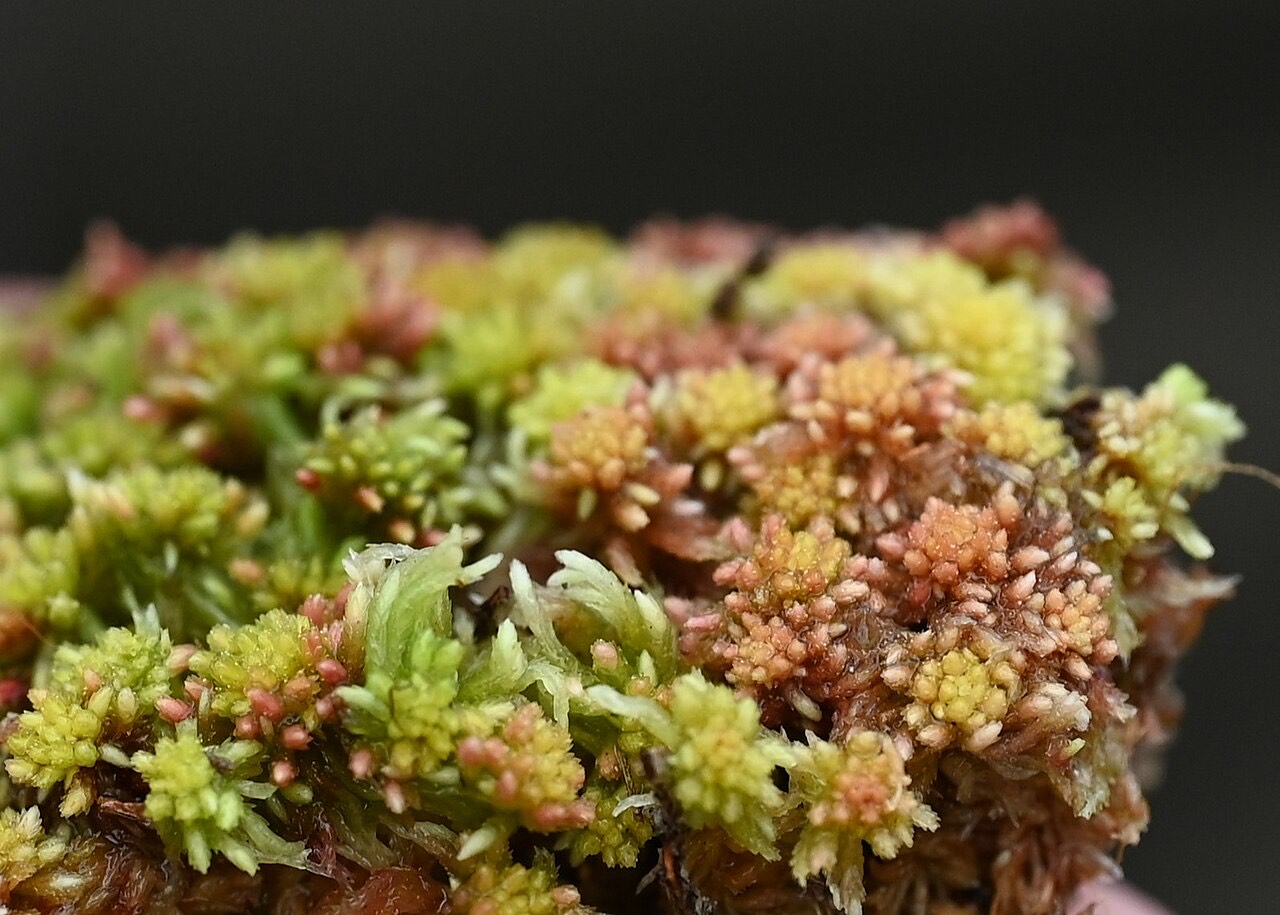
Bog moss Sphagnum capillifolium
The peat-builders. Sphagnum holds many times its own weight in water and slowly lays down the peat of moors and mires. Acid-loving, spongy, and often flushed red. If you keep carnivorous plants you already know it.
There are thousands of moss species, but a small handful turn up again and again in temperate gardens, woods and walls. Learn these first; they train your eye for the rest.
The peat-builders. Sphagnum holds many times its own weight in water and slowly lays down the peat of moors and mires. Acid-loving, spongy, and often flushed red. If you keep carnivorous plants you already know it.
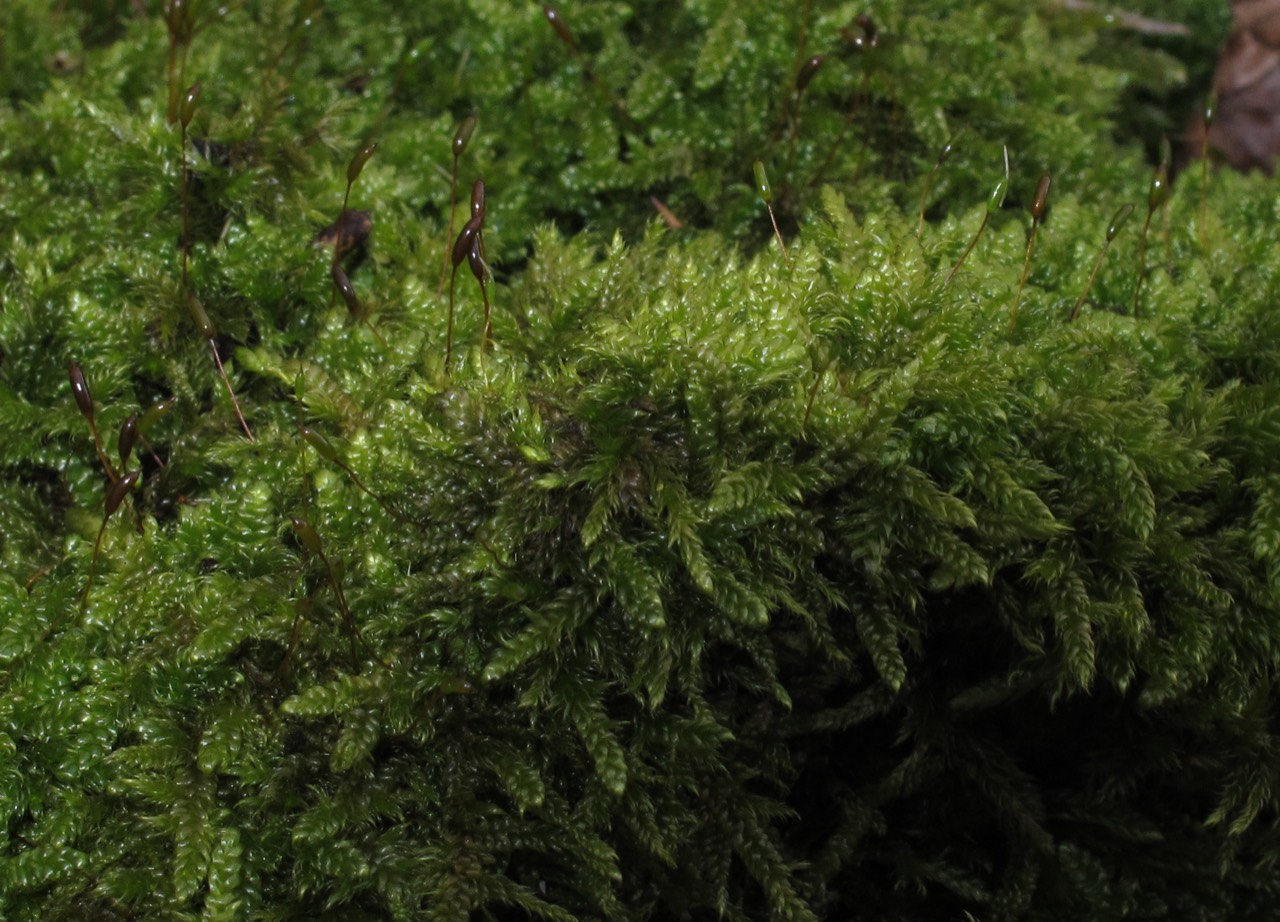
Possibly the most common moss in the temperate world. A flat, glossy, trailing mat on tree trunks, fence posts, roofs and rocks. Tolerant of almost anything, which is why it is everywhere.
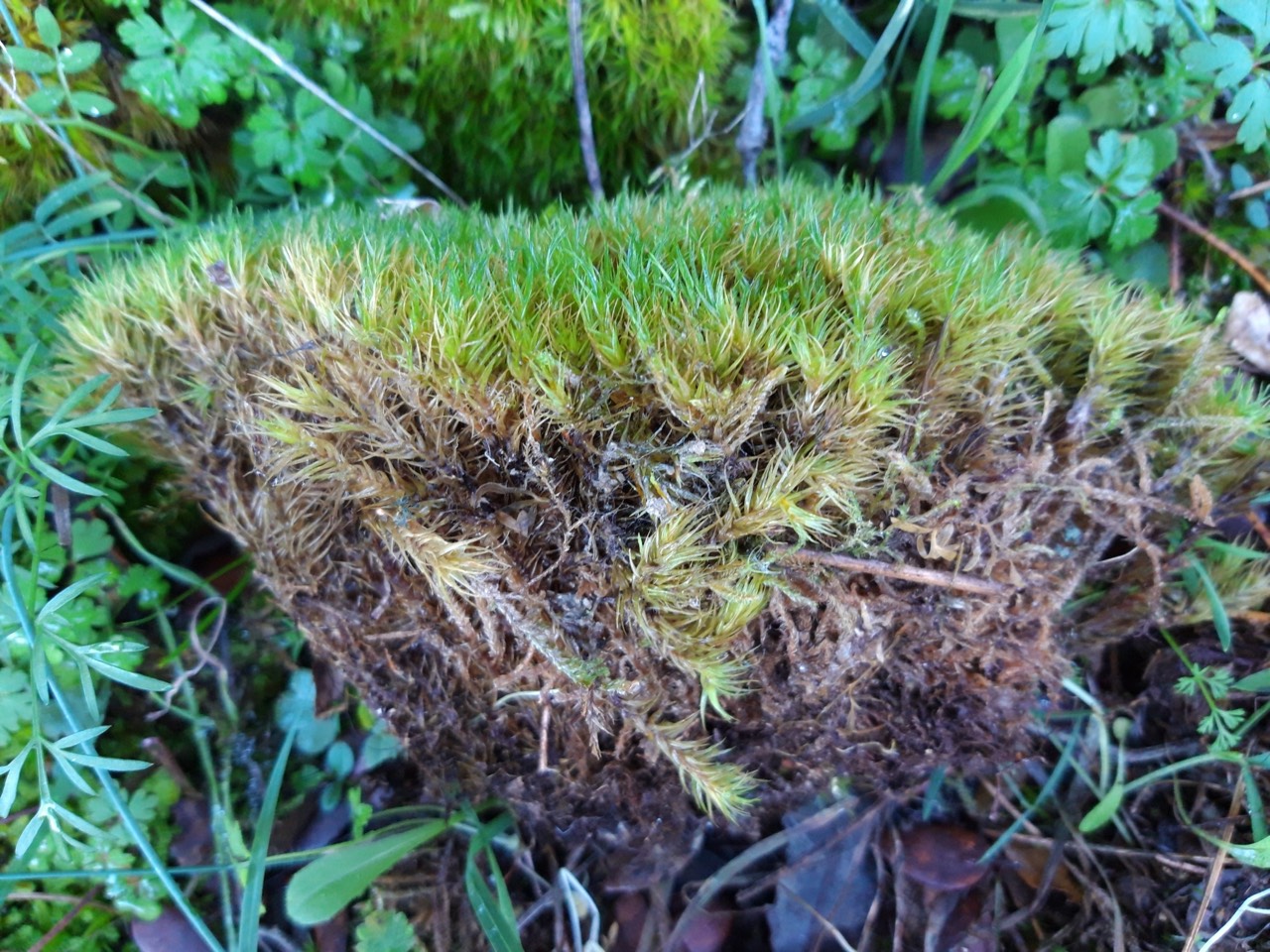
Its leaves all sweep to one side as if combed by the wind, forming deep, springy cushions on woodland floors and acid banks. A favourite for terrariums because the look is so distinctive.
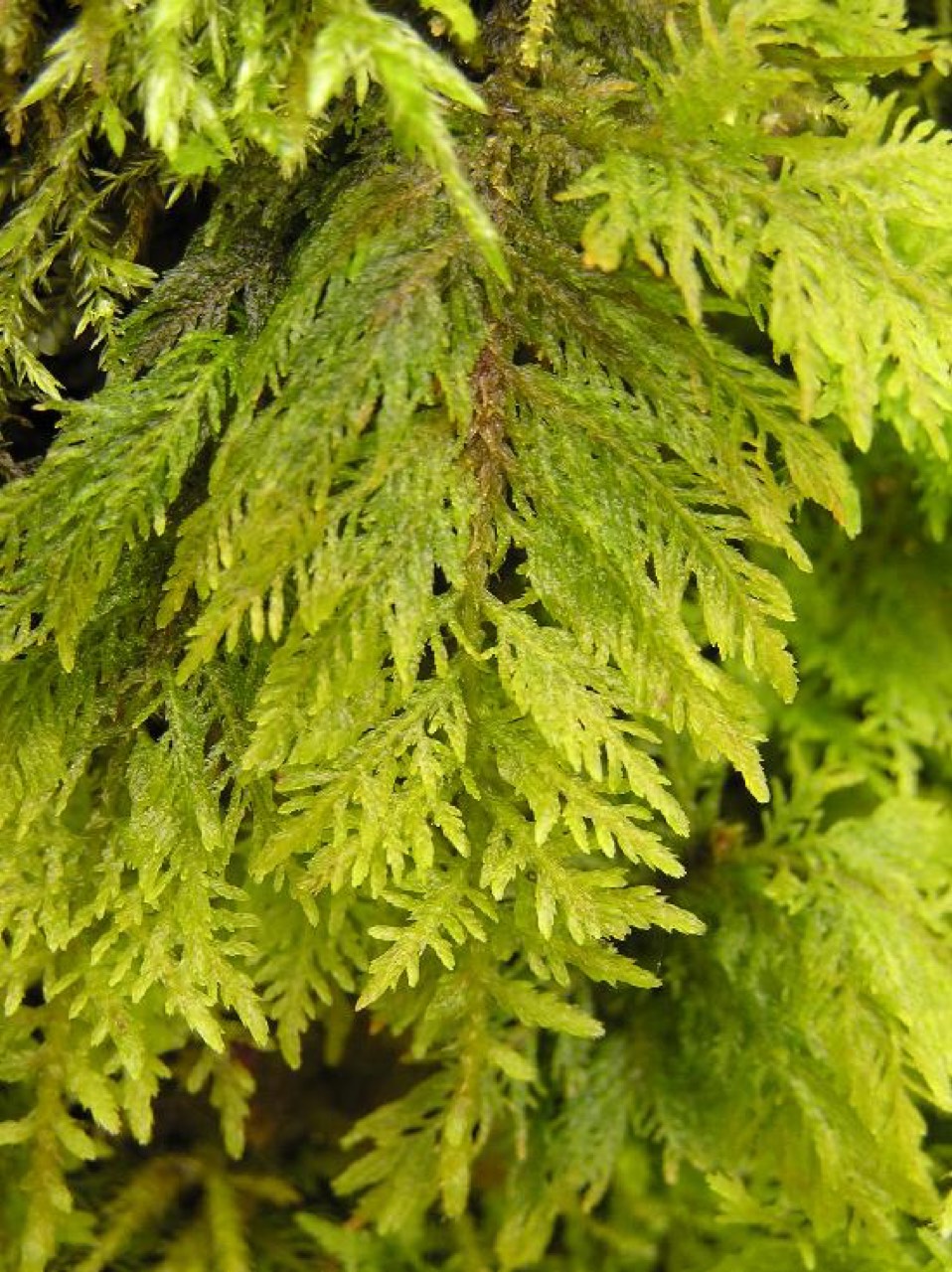
Three-times-branched fronds give it the look of a tiny fern. A handsome, sprawling moss of damp, shaded woodland and stream banks, and a fine choice for a shaded patch of ground.
Identifying mosses to species often needs a hand lens and patience with leaf shape and capsule detail. Do not let that put you off. Knowing a moss as "a plait moss" or "a haircap" is plenty to start gardening with, and the names come with familiarity. When I started I could not tell three of the wall mosses apart, and honestly I still take some of them to the genus and stop there. A cheap 10x lens changed more than any amount of reading did, so if you want to go deeper, buy the lens before the book.
Once your eye is in, the surface a moss is growing on is a strong clue to which it is. The tops of walls and the mortar between bricks tend to host tight grey-green cushions like wall screw-moss, hardy things that cope with sun and drying. Tree bark and fence posts carry the flat, trailing mats of plait moss and its relatives. Shaded woodland soil and acid banks grow the deep cushions of broom fork-moss and the fern-like fronds of tamarisk moss. Pavement cracks and trampled ground in towns belong to the tough silvery thread-moss. Knowing the typical residents of each surface means you are half way to a name before you have even reached for the lens.
Beyond individual names, every moss here falls into one of two groups that decide how it behaves. The cushion-formers, the acrocarpous mosses such as the screw-mosses and haircaps, grow as upright domes and stay compact. The carpet-formers, the pleurocarpous mosses such as the plait and feather mosses, creep and branch into spreading mats. It is the most useful single distinction in the whole subject, because it tells you at a glance whether a moss will sit as a neat cushion or knit into continuous cover. It has its own guide in acrocarpous and pleurocarpous mosses.
Mosses carry both Latin names and, increasingly, English ones, and the English names are often charmingly descriptive once you know the plant: plait moss for the braided look of its shoots, fork-moss for its divided leaf tips, feather-moss for its frond-like branching. You do not need the Latin to garden with moss, but it is worth noting because the same English name is sometimes used loosely for several species, so when buying or recording it the Latin name is what pins down exactly which moss you mean.
The Mossbank letter
Join the letter for occasional, unhurried notes on growing and keeping moss. Leave your email below and pick up the one-page Moss Care Cheat Sheet, a printable summary of light, water and patience for terrariums, walls and gardens.